Successful Meta Ads scaling is not simply increasing budget; it is increasing spend while maintaining acceptable profitability, sales volume, and efficiency. The key is to review performance in controlled intervals, identify when Meta stops delivering incremental results, and adjust budgets based on data rather than emotion.
Key Takeaways
Scaling must be measured over time: Use rolling 7-day intervals to see whether higher spend is producing more purchases and maintaining target ROAS.
ROAS alone is not enough: Track total spend, purchase volume, and profitability together to understand whether scaling is actually working.
Resistance is normal: Meta may stop producing additional sales after a certain spend level, even if budgets continue increasing.
Do not react too quickly: One weak day or one sign of resistance is not enough to stop scaling. Look for repeated resistance across multiple intervals.
Controlled downscaling protects profit: When spend rises but sales flatten or ROAS drops below target, reduce budgets gradually and reallocate spend to stronger campaigns.
Processes reduce emotional decisions: A structured review system helps advertisers avoid overreacting to daily volatility or personal bias.
How It Works
1. Define Your Profitability Threshold
Before scaling, establish the minimum ROAS or CPA that keeps the account profitable. For example, if the business breaks even at 2x ROAS but wants healthy profit at 4x ROAS, then 4x becomes the operating target. This benchmark determines whether scaling should continue, pause, or reverse.
Without a clear target, advertisers may confuse revenue growth with profit growth. A campaign can generate more sales while becoming less profitable if spend rises faster than revenue.
2. Review Performance in 7-Day Intervals
Use a rolling 7-day view rather than relying only on daily performance. Meta Ads can fluctuate heavily from one day to the next, so short windows often create misleading conclusions. A 7-day interval gives enough data to evaluate direction without waiting too long to act.
For each interval, compare three core numbers: total ad spend, number of purchases or sales, and ROAS. The goal is to see spend increasing while purchase volume also increases and ROAS remains near or above the profitability target.
3. Identify Healthy Scaling
Healthy scaling occurs when spend rises and the account continues to generate additional sales without a major drop in efficiency. For example, increasing from $10,000 to $15,000 in 7-day spend while purchases also rise meaningfully and ROAS remains strong indicates that the account is absorbing more budget successfully.
This usually happens when the account has enough winning inputs: multiple campaigns, tested creative angles, stable offers, and consistent average results. Scaling is easier when performance does not depend on one campaign, one ad, or one audience.
4. Watch for Resistance Points
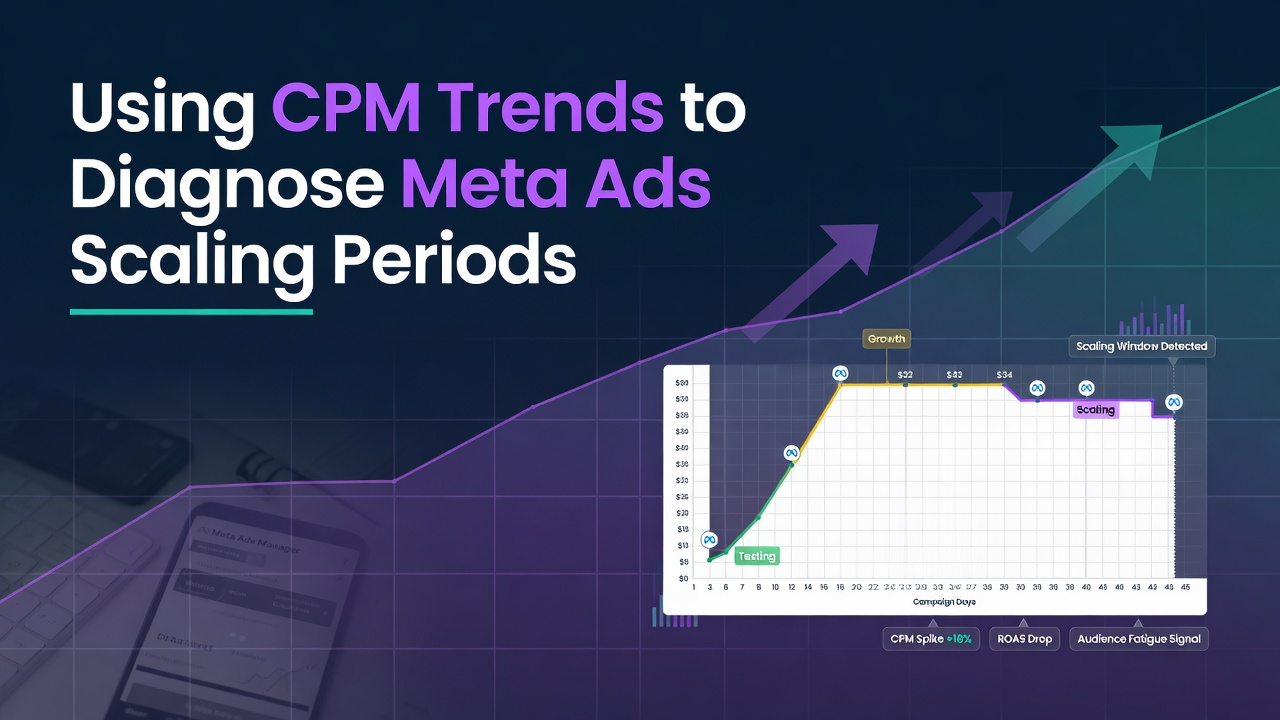
A resistance point appears when additional spend no longer produces meaningful additional sales. For example, an account may rise from $18,000 to $22,000 in 7-day spend but remain around the same purchase volume. In that case, the extra budget is not creating incremental value; it is only reducing efficiency.
Resistance does not always mean scaling is over immediately. Sometimes the account breaks through after a brief plateau. However, if the same sales volume repeats over two or three consecutive intervals while spend increases, that is a clear warning that Meta is limiting incremental delivery.
Scaling is only successful when higher spend creates higher profitable output, not just higher ad costs.
5. Stabilize After Meta Stops Scaling
When the account hits a ceiling, the objective shifts from aggressive scaling to stabilization. Gradually reduce budgets until the account returns to the target profitability range. If the desired ROAS is 4x and the account drops below that level, downscale carefully until performance stabilizes.
A controlled reduction is better than a sudden account-wide budget cut. Abrupt changes can disrupt delivery, reset learning behavior, and make it harder to understand which campaigns are still valuable.
6. Reallocate Budget Based on Average Results
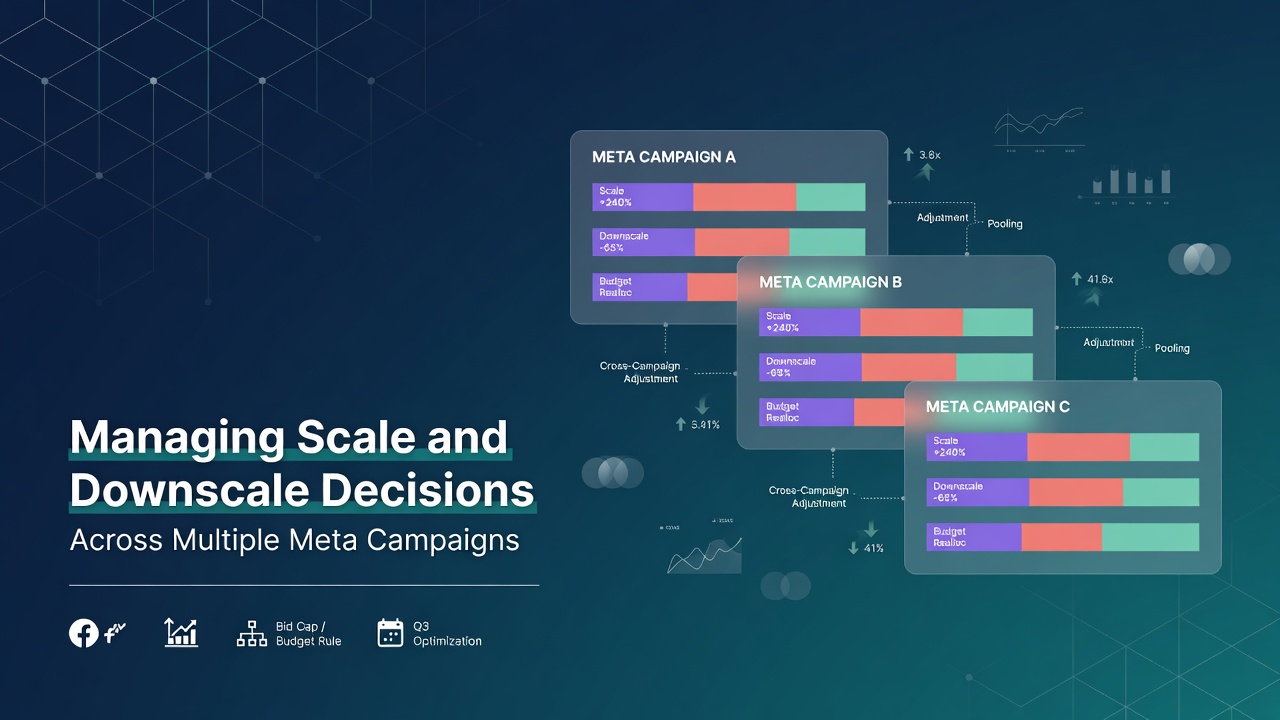
Once resistance appears, evaluate campaigns individually using average performance over a meaningful period. Increase budget on campaigns above the target ROAS and reduce or pause campaigns below the target. For example, a campaign at 5.3x ROAS may deserve more budget, while one at 3.4x should be reduced if the target is 4x.
This reallocation improves the account average and helps preserve profitability while maintaining as much scaled spend as possible.
Practical Tips
Create a simple scaling tracker: Record every 7-day interval with spend, purchases, revenue, ROAS, and notes about budget changes.
Increase budgets progressively: Scale in controlled steps instead of making large emotional jumps after one good day.
Look for incremental sales: If spend rises but purchases do not, the account may have hit a short-term ceiling.
Separate testing from scaling: Keep testing new creatives, angles, and campaign structures so the account has fresh opportunities to absorb more budget.
Use account-level averages: Do not judge scaling only by one campaign. The total account result matters most for business profitability.
Protect your target ROAS: If your profit target is 4x, do not justify prolonged scaling at 3x unless there is a clear strategic reason.
Common Mistakes to Avoid
Confusing spend growth with scaling: Spending more is not scaling if sales and profit do not increase proportionally.
Stopping after one weak interval: Short-term resistance can break. Confirm the pattern over multiple intervals before making major decisions.
Ignoring profit: Revenue and order volume can look impressive while margins deteriorate.
Making emotional changes: Personal mood, fear, or excitement can lead to poor budget decisions. Use a repeatable process instead.
Cutting too aggressively: Sudden budget drops can destabilize campaigns and hide useful performance signals.
Over-scaling weak campaigns: Budget should flow toward campaigns with strong average results, not campaigns that had one lucky day.
The practical goal is to find the highest sustainable spend level where Meta Ads still produces profitable incremental results. Once that level is reached, stabilize, optimize, and prepare new creative or campaign opportunities before attempting the next scaling push.